#
#shoelace style, #shoelace, #shoelaces easy pattern, #shoelace #knot styles, #shoelace yeezy, #shoelace yeezy 350, #shoelace #tricks, #shoelace tying, #shoelace style for formal shoes, #shoelace hacks for pants, #shoelace design for converse, #shoelace clip, #shoelace designs for vans, #shoe lace tie
A History of Shoes & Shoelaces
No one quite knows the first time shoelaces were used to secure shoes. In fact, most reports indicate that shoelaces are as old as shoes themselves. Archaeologists believe that ancient peoples used shoelaces for the same reasons we currently use them, experimenting with materials to influence comfort, fit and even style.
They think that about 5,000 years ago, during the late Neolithic and
early Bronze Age periods, cavemen and women also used specific shoelace
designs to distinguish between tribes.
Most importantly,
shoelaces kept early man’s shoes tight and fitted, accommodating their
need to travel long distances for food, water and shelter without
causing severe damage to their feet. Could you imagine embarking on long
hunts across overgrown land with only your bare feet? It makes me sore
just thinking about it.
Throughout history, shoes and shoelaces evolved as man evolved, changing with our environments, fashion trends and professional and recreational needs. In order to understand the evolution of shoelaces, we must take a journey through the incredible timeline of shoes, starting with the oldest leather shoe in history: the Areni-1 shoe.
Areni-1
The world looked like a very different place 5,500 years ago. Thousands of years before industrialization, Earth was overgrown, belonging to nature and shared by early man. Believe it or not, the oldest leather shoe found by archaeologists existed during this time period.
Shocking to archaeologists, the old,
moccasin-like shoe looked eerily similar to the modern shoe. It was made
from a single piece of cowhide and included a leather cord lacing
system on both the front and back seams of the shoes.
These
early, fitted shoes were especially necessary for nomadic tribes, as
shoes allowed them to travel faster with safety. Maybe cavemen were a
bit smarter than we give them credit for!
Ötzi the Iceman
Before the recent discovery of the
5,500-year-old shoe in Armenia, it was believed that the first
closed-toe shoes were found on a frozen caveman. Scientists named the
3300-BCE iceman Ötzi, marveling at one thing in particular: his shoes
and laces.
Unlike modern-day humans, these cavemen were forced to
hunt for all resources, including the hide from which they formed some
of the first shoes known to man. Ötzi’s shoes appeared to be more
complex than the shoes found on the 5,500-year-old Armenian, comprised
of both brown bearskin and deerskin. Instead of leather, Ötzi was
discovered wearing shoelaces made from a hemp-and-rope net that lined
the top and inside of the shoe.
Ancient Greeks & Romans
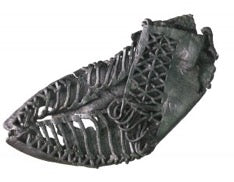
Image Source: Current Archaeology
As early as 2000 BC, Greeks and Romans made shoes comprised of leather pieces bound to the foot and ankle with leather laces. These moccasin-like, open-toed sandals were known as the carbatine, derived from the word karbatinos, meaning “made of rawhide.”
Unlike modern-day sandals, the
carbatine were meant to fit either the right or the left foot. Don’t you
wish you never had to worry about putting your shoe on the wrong foot?
Sounds like a time-saver to us!
Brogues
Fast-forward to the 16th century and shoes start looking even more similar to our modern boots. Brogues were first seen in Ireland and Scotland during the 1500s, popular among men looking for a solution to slow-draining shoes when wading out of wet, muddy bogs. The shoes were able to drain and dry quicker because of the characteristic perforations decorating the sides of the boots.
Instead of laces, most early brogues were
fastened over the top of the foot with a perforated strip of leather and
a buckle. Brogan shoes with which we are familiar today evolved from
these brogues.
During the 17th, 18th and 19th centuries,
brogan-style shoes were popular among soldiers at war because of foot
and ankle support. They had modern lacing systems made of leather
threaded through holes in the top strip of the shoe.
By World War I, soldiers increased the functionality of the shoe, adding hobnails to the soles to increase grip, traction and durability of the shoe. This helped soldiers maintain balance during important battles on slippery snow, rocks and uneven ground.
Modern Shoelaces
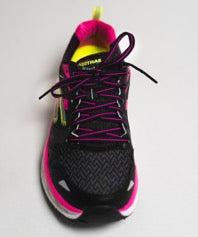 While
Ötzi the Iceman and the Areni-1 shoe provide evidence that shoestrings
have been around for thousands of years, Englishman Harvey Kennedy
officially patented the shoestring in March 1790.
While
Ötzi the Iceman and the Areni-1 shoe provide evidence that shoestrings
have been around for thousands of years, Englishman Harvey Kennedy
officially patented the shoestring in March 1790.
Kennedy was not
the first to invent shoelaces; however, his version of the shoestring
included the aglet, a metal or plastic sheath that protects the ends of
the laces. The aglet prevents the shoestrings from unravelling, making
the process of threading the laces through the eyelets much easier.
Needless to say, shoelaces with aglets were a hit.
Rise of No-tie Shoes & Laces
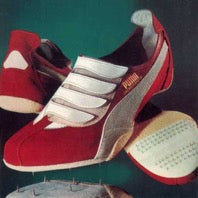 Like
brogues that used buckles rather than laces, other types of no-tie
shoes began gaining popularity in the mid-20th century. In 1968, Puma
became the first major shoe company to sell sneakers with
Velcro-fastening systems. Surprisingly, the new style caught on rather
quickly, reaching a peak in 1980s among parents of young children
looking for faster alternatives to traditional tying laces.
Like
brogues that used buckles rather than laces, other types of no-tie
shoes began gaining popularity in the mid-20th century. In 1968, Puma
became the first major shoe company to sell sneakers with
Velcro-fastening systems. Surprisingly, the new style caught on rather
quickly, reaching a peak in 1980s among parents of young children
looking for faster alternatives to traditional tying laces.
However, at the turn of the 21st century, the style lost popularity because of its bulky, outdated appearance. Adults and children alike did not want to limit their styles to the plain selection of Velcro-fastening shoes. Instead of a no-tie shoes, people wanted no-tie laces that could be installed in any shoe with eyelets.
LOCK LACES®
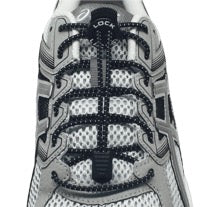 As a result, laces were born. Laces simply remove shoe-tying from your life
entirely. All you have to do is replace your old laces with our elastic
no-tie laces. They tighten and loosen with an easy-to-slide lock,
keeping your shoe perfectly fitted for the entire day. This innovative
idea changed the concept of shoelaces forever.
As a result, laces were born. Laces simply remove shoe-tying from your life
entirely. All you have to do is replace your old laces with our elastic
no-tie laces. They tighten and loosen with an easy-to-slide lock,
keeping your shoe perfectly fitted for the entire day. This innovative
idea changed the concept of shoelaces forever.
Shoes and shoelaces have come a long way in the past 5,500 years,
evolving alongside man and woman and influenced by environment, culture
and necessity. If you’re interested in learning more about how no-tie
laces can benefit your lifestyle, check out our articles on the benefits
of laces

No comments:
Post a Comment